
Aristarchus Crater
A very bright young crater on the Aristarchus Plateau, near volcanic features including Vallis Schröteri.
What you are looking at
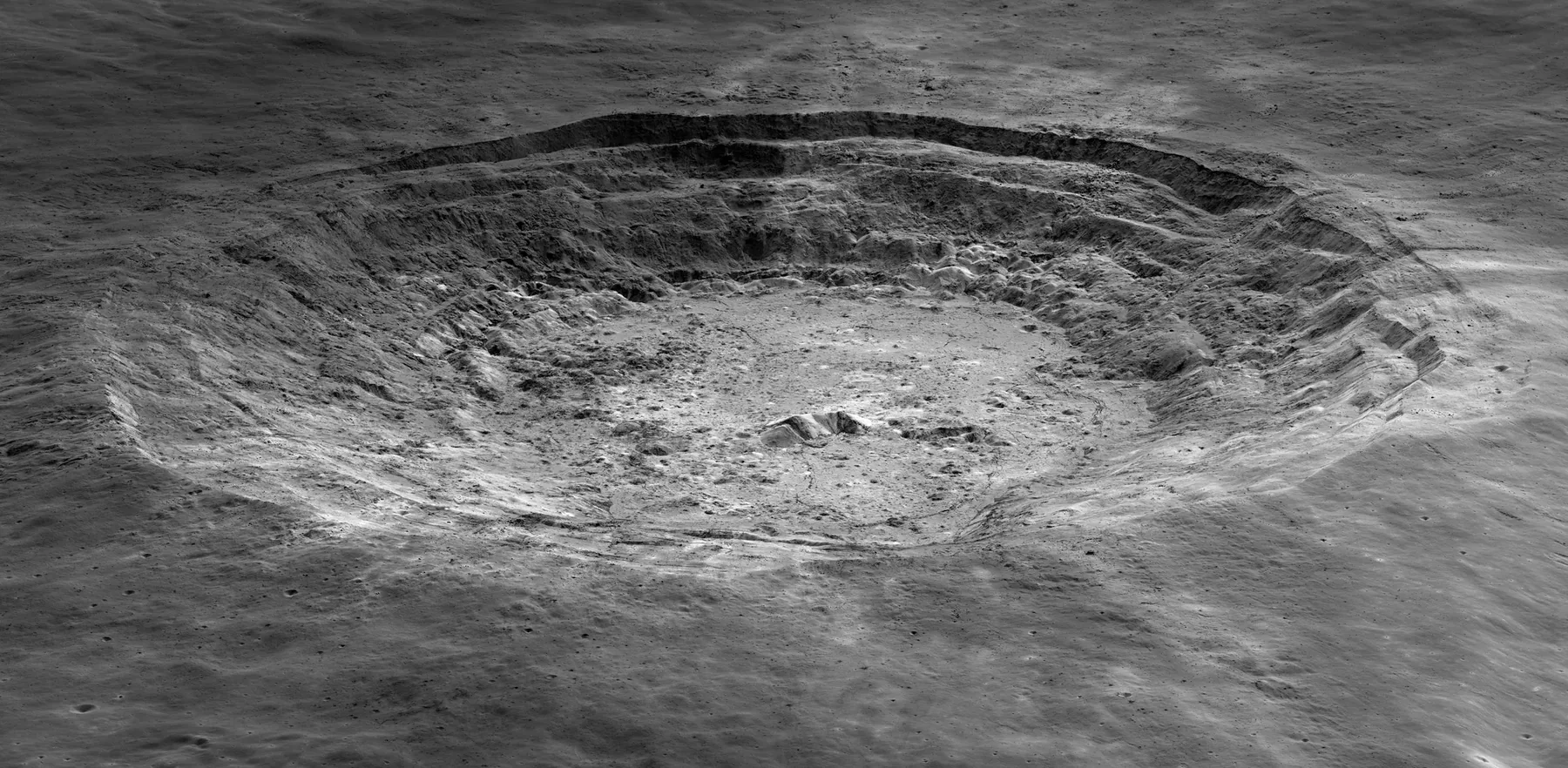
Aristarchus is about 40 km wide but is exceptionally bright. It has steep terraced walls, a central peak and high-albedo ejecta that stand out strongly against the darker volcanic terrain of Oceanus Procellarum.
How it formed and changed
The crater sits on the geologically diverse Aristarchus Plateau near volcanic deposits, rilles and pyroclastic materials. The proximity of a young impact crater and major volcanic landforms makes the region scientifically rich.
What scientists learn here
Orbital spectroscopy and imaging help separate impact-excavated material from surrounding volcanic units. The plateau also contains evidence of explosive volcanism and is frequently used to study compositional diversity on the near side.
How to find and observe Aristarchus Crater
Aristarchus remains bright under many illumination conditions and can appear almost luminous through a telescope. Observe the region at lower Sun angles to trace nearby Vallis Schröteri as well as the crater itself.
Nearby landmarks and exploration context
Vallis Schröteri, the Moon's largest prominent sinuous rille, lies nearby on the Aristarchus Plateau. Herodotus crater and broad Oceanus Procellarum plains provide useful landmarks.
Why this feature matters
The region combines impact geology with evidence of ancient volcanism and is visually striking through telescopes.