
Clavius Crater
One of the largest conspicuous crater formations visible from Earth, containing a distinctive arc of smaller interior craters.
What you are looking at
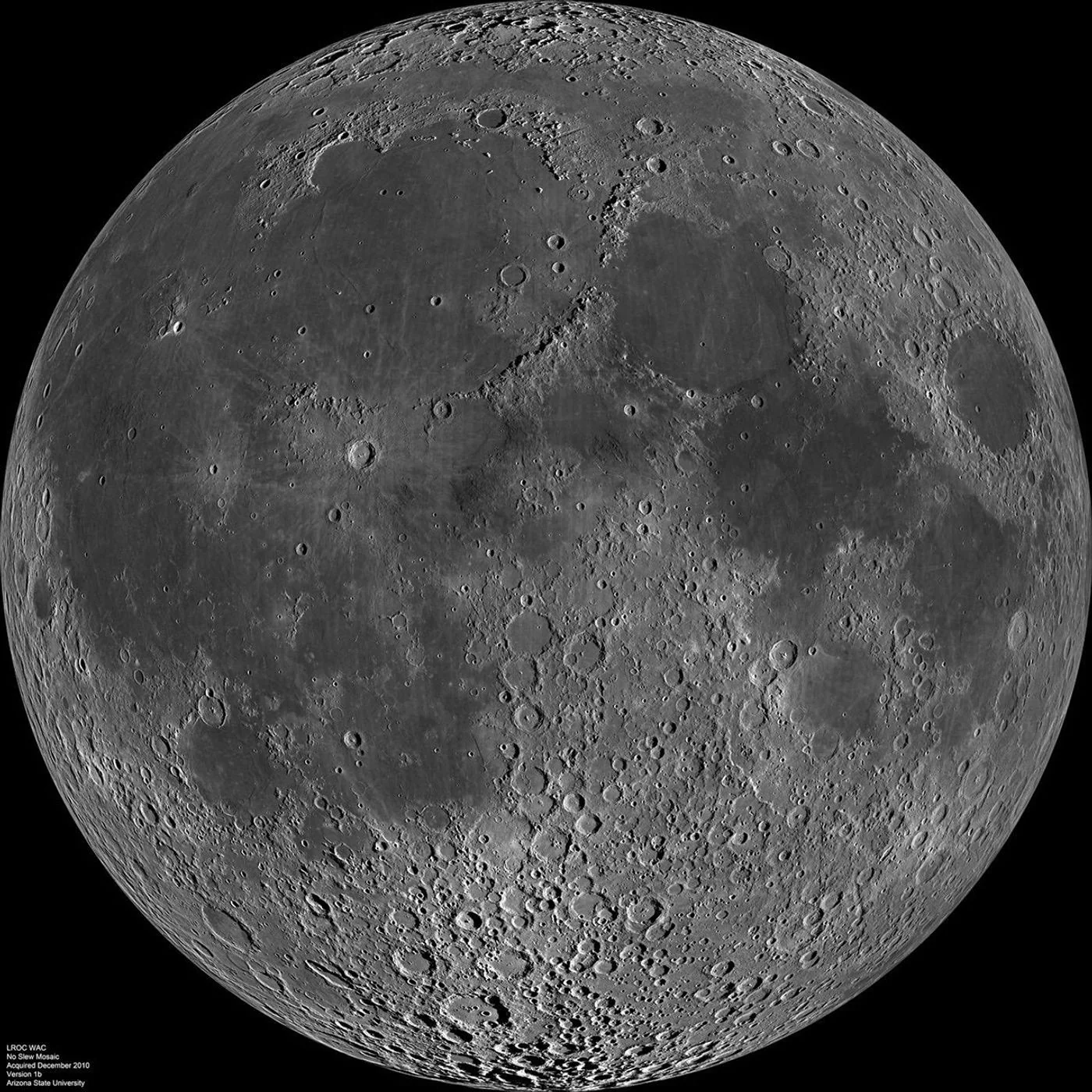
Clavius spans roughly 225 km and has a broad worn rim enclosing many later craters. A distinctive curved sequence of interior craters makes it easy to recognise through a telescope when lighting is favourable.
How it formed and changed
Clavius is old enough that later impacts have heavily modified its floor and rim. The superposed craters demonstrate relative-age reasoning directly: younger impacts cut into and overprint the older basin-like structure.
What scientists learn here
Its degraded morphology contrasts with young craters such as Tycho and Copernicus, making Clavius useful for understanding how bombardment and regolith gardening progressively modify impact landforms.
How to find and observe Clavius Crater
Clavius is a rewarding southern target near first and last quarter. The interior crater arc becomes obvious in moderate telescopes, while changing illumination reveals the battered rim and overlapping crater walls.
Nearby landmarks and exploration context
Tycho lies to the north-east. The surrounding southern highlands contain dense crater populations that make this region visually very different from the smooth maria.
Why this feature matters
Its scale and nested craters make it useful for understanding crater superposition and observing changing shadow relief.