
Mare Imbrium
A vast basalt-filled impact basin dominating the northwestern near side.
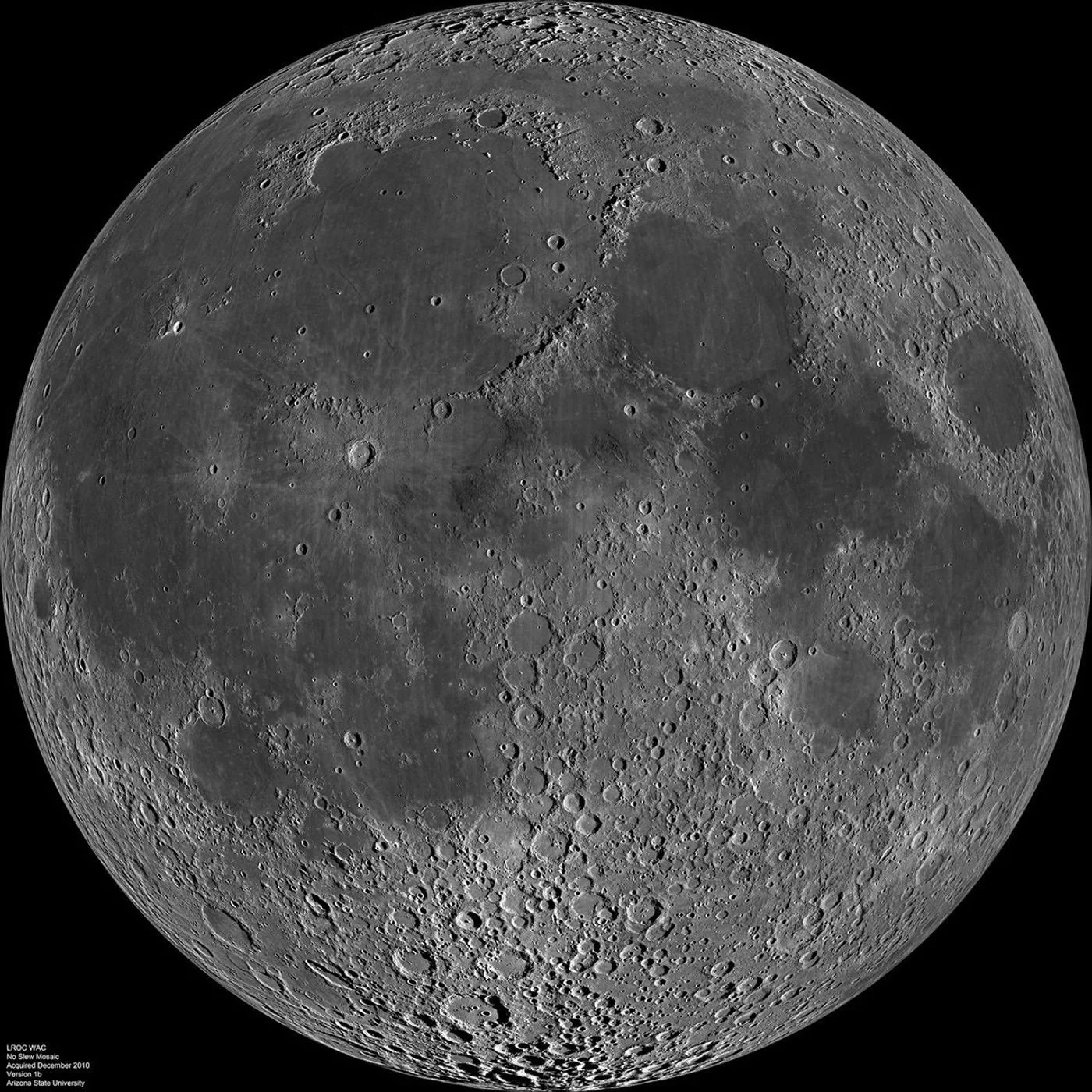
What you are looking at
Mare Imbrium occupies the floor of the enormous Imbrium impact basin. Dark basalt plains are ringed by mountain arcs and interrupted by craters, ridges and volcanic features.
How it formed and changed
The basin-forming impact excavated and restructured a huge region of the Moon. Later lava flows filled much of the basin interior, preserving a layered record of impact and volcanic history.
What scientists learn here
Imbrium ejecta affected a large fraction of the near side, which complicates attempts to interpret distant samples and crater ages. The basin is therefore central to debates about early lunar bombardment chronology.
How to find and observe Mare Imbrium
Mare Imbrium is easy to see with the unaided eye. Around first quarter, its mountain boundaries and crater rims cast strong shadows. Plato, Archimedes and the Apennine Mountains are excellent telescopic landmarks.
Nearby landmarks and exploration context
The Apennine Mountains form part of the basin rim to the south-east. Apollo 15 landed at the Hadley-Apennine boundary, while Copernicus lies south of the mare.
Why this feature matters
Its basin structure, lava plains and surrounding mountains preserve major episodes of lunar impact and volcanic history.