
Oceanus Procellarum
The Moon's largest named dark volcanic plain, spanning a huge portion of the western near side.
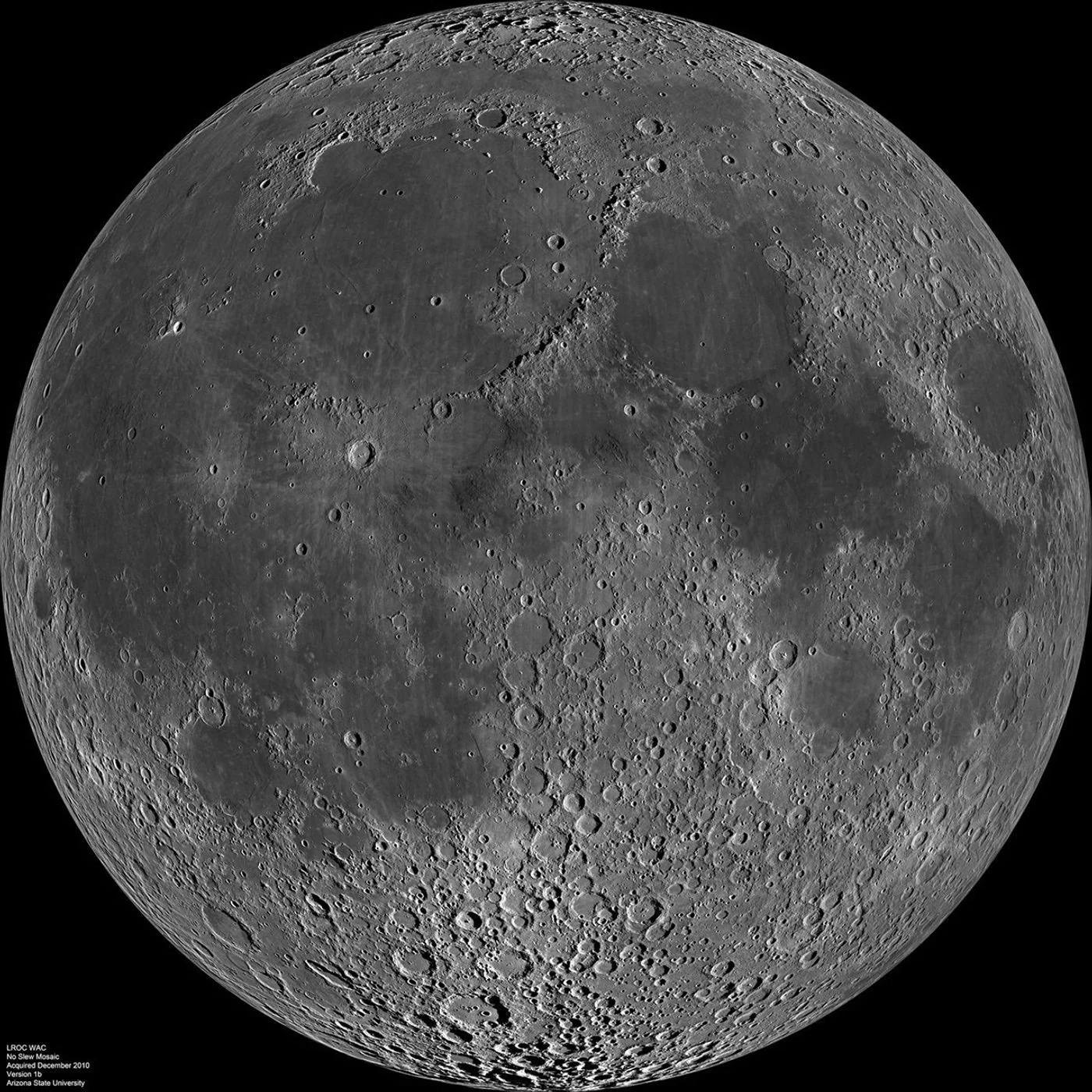
What you are looking at
Oceanus Procellarum is the Moon's largest named dark plain, extending across much of the western near side. Unlike many circular maria, it does not correspond neatly to one obvious impact basin.
How it formed and changed
The region contains lava flows spanning a wide range of ages, volcanic domes, rilles and geochemical anomalies. Its origin and relationship to large-scale crustal structures have been investigated using GRAIL gravity data and global compositional maps.
What scientists learn here
Samples returned by Chang'e 5 from northern Oceanus Procellarum dated comparatively young basalts, demonstrating that lunar volcanism persisted much later than the ages represented by most Apollo samples.
How to find and observe Oceanus Procellarum
Procellarum dominates the western half of the visible lunar disk. A telescope reveals strong contrasts between smooth mare, bright craters such as Aristarchus and Copernicus, and sinuous volcanic features.
Nearby landmarks and exploration context
The Aristarchus Plateau, Reiner Gamma, Marius Hills and several Apollo-era robotic landing regions lie within or along the province.
Why this feature matters
It contains diverse volcanic terrains and hosted multiple robotic and sample-return missions.