
Tycho Crater
A young, conspicuous impact crater surrounded by an extensive bright ray system visible across much of the near side.
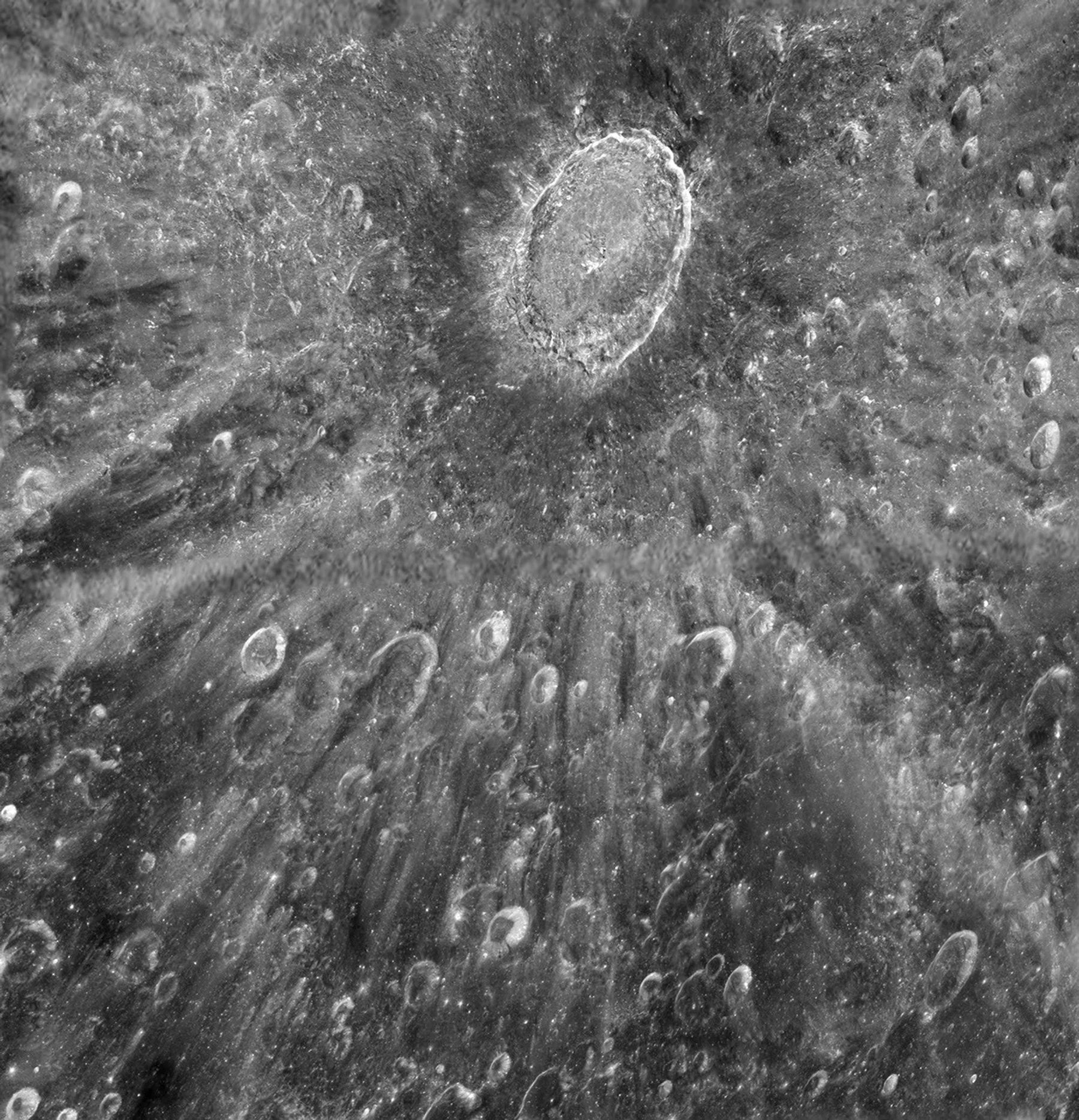
What you are looking at
Tycho is about 85 km wide with terraced walls, a relatively flat floor, a central mountain complex and one of the Moon's most conspicuous ray systems. Its crisp relief reflects its geologically young age.
How it formed and changed
The impact excavated and melted highland crust, threw ejecta across a vast area and produced secondary craters far from the rim. Bright rays remain optically fresh because space weathering has had less time to darken the excavated material than on older terrain.
What scientists learn here
LRO images reveal impact-melt ponds, boulder tracks, fractured central-peak material and wall-collapse deposits at metre scales. Tycho is also important to lunar chronology because material attributed to its ejecta has been connected with Apollo 17 sample studies.
How to find and observe Tycho Crater
Tycho is easy to identify in the southern highlands. Near full Moon its rays dominate the disk; several days away from full Moon, lower sunlight makes the rim, terraces and central peaks much easier to read in relief.
Nearby landmarks and exploration context
Look north toward Mare Nubium and the central near side, and south toward the densely cratered southern highlands. Clavius lies farther south and provides a useful size contrast.
Why this feature matters
Tycho is a useful case study in impact ejecta, crater morphology and relative surface age.