
Von Kármán Crater
A far-side crater within the South Pole-Aitken Basin and the landing region of Chang'e 4.
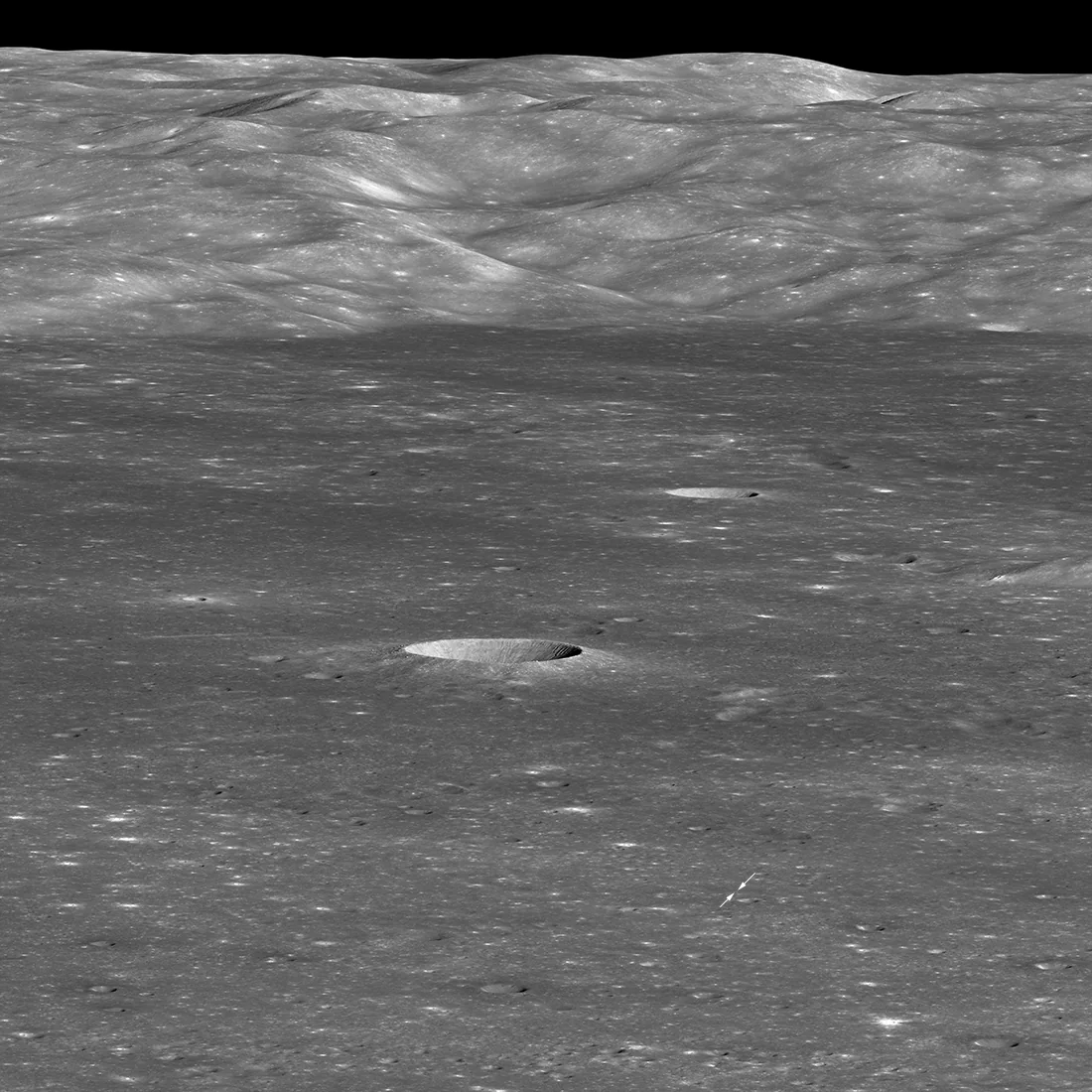
What you are looking at
Von Kármán is about 186 km wide and has a relatively smooth floor modified by later impacts and volcanic materials. Its far-side location means it is never directly visible from Earth.
How it formed and changed
Because the crater lies within the ancient South Pole-Aitken Basin, local rocks and regolith may record both basin-scale excavation and later geological processes.
What scientists learn here
Chang'e 4 and Yutu-2 provide in-situ imagery, spectroscopy and subsurface radar measurements from the crater floor. These local observations complement global orbital datasets but represent one part of the enormous basin.
How to find and observe Von Kármán Crater
Earth-based telescopes cannot see Von Kármán because it lies on the lunar far side. Spacecraft imagery is the only practical way to explore its landscape visually.
Nearby landmarks and exploration context
The Chang'e 4 landing site lies on the crater floor. The broader South Pole-Aitken Basin extends far beyond the crater boundaries.
Why this feature matters
It combines ancient basin geology with the first in-situ exploration of the lunar far side.